On 8 October 2026, Vanxay Phongsavanh, president of the State Inspection Authority, reported to the 2nd Ordinary Session of the 10th National Assembly that the Vientiane Capital bus rapid transit project, which has a value of 99.7 million US dollars, had bought 150 electric tricycles for a total of 456,000 US dollars, or 3,040 US dollars each, to support the transport system, but that all 150 vehicles were still unused because the project organisers had not built or designated parking for them.
If you look only at vehicles bought and then left with nowhere to park, it may seem just one expense in an urban transport project. But if you follow the state's loans and investment further, you see that the money did not stop at the buses. It reaches the electricity system, dams, a satellite and the railway. And what helps make the path of the money clearer is not opinion. It is the reports that the State Inspection Authority and the State Audit Organization presented to the National Assembly, together with documents from the World Bank, the International Monetary Fund (IMF) and official news, which record where the borrowed money went and what is still outstanding.
The Vientiane bus rapid transit project
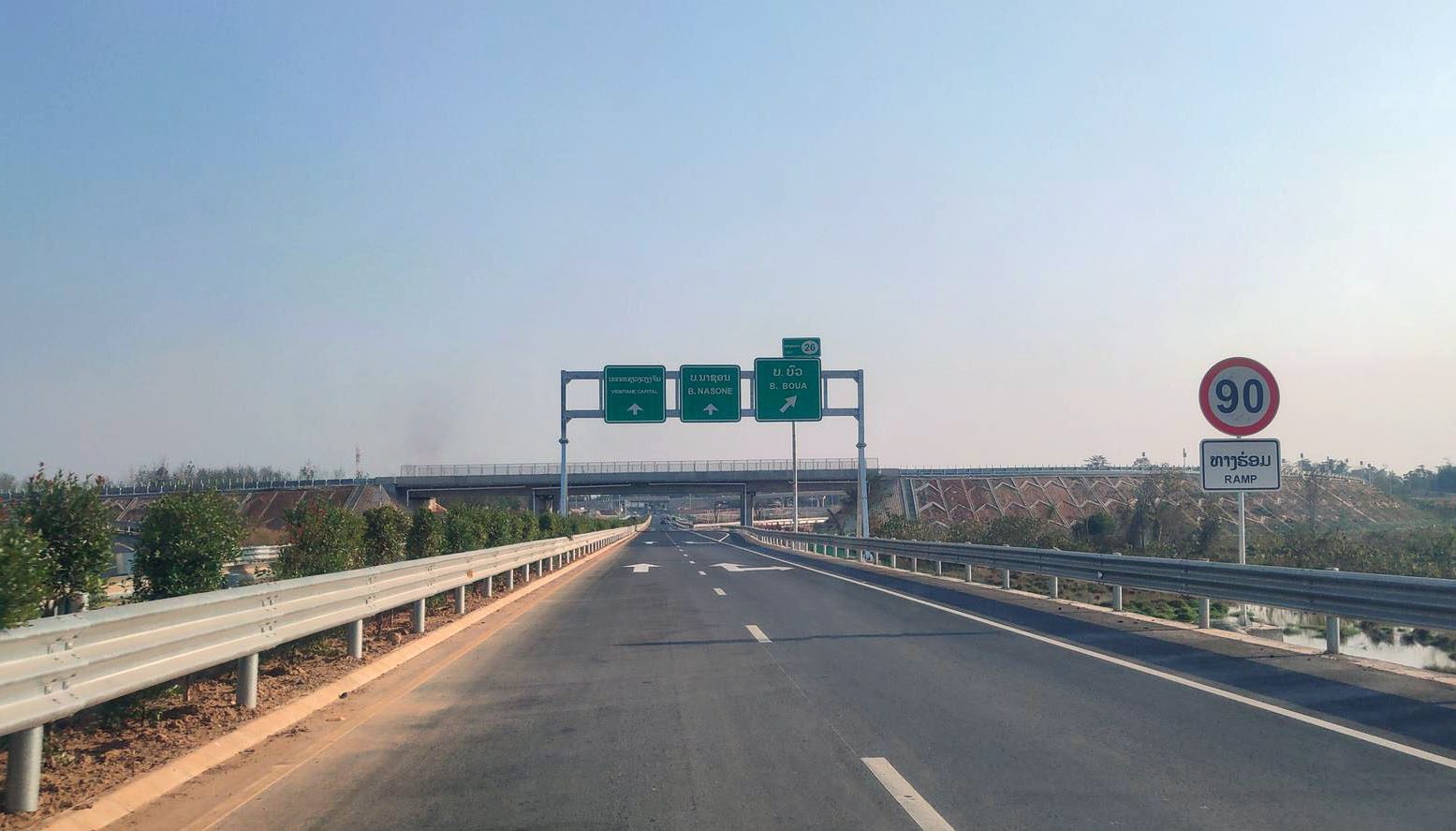
The State Inspection Authority reported that in the first 9 months of 2026 it had inspected a number of public projects, and that in the Vientiane Capital bus rapid transit project — whose official name is the Vientiane Sustainable Urban Transport Project, and which is recorded in the Asian Development Bank's project database — it had found questioned expenditures totalling 1.976 million US dollars.
Part of this was 1.52 million US dollars spent upgrading 9 roads outside the approved scope, including work on one road that had not yet been approved, worth 584,508 US dollars. The other 456,000 US dollars was the cost of the 150 electric tricycles that were still unused.
Beyond the spending, the Authority also found that 33 contracts signed between 2018 and 2025, with a combined value of 58.71 million US dollars, had no Lao-language version at all; that contracts had been extended again and again without the work progressing in step; and that in some cases bus rapid transit stations already built had to be torn down because the designs had not yet received official approval.
The Authority said the inspection of this project was still under way and that the full financial impact had not yet been fully disclosed, so the figure of 1.976 million US dollars is what was reported in early October 2026, not the project's final loss.
The transport budget and state investment projects
In the same report, the Authority also spoke of the transport budget in Vientiane Capital and Xaysomboun Province, saying the government had used the 2024 and 2025 budgets to pay debts on projects going back to 2017.
Of 178 projects inspected, 44 had contracts signed at amounts above the ceiling approved by the National Assembly, and in 7 cases contractors had built new work on top of old work that was still under warranty.
In Vientiane Capital, inspectors reviewed 58 state investment projects and found that in 30 cases the amounts paid as recorded by the Vientiane Capital Department of Finance did not match the amounts reported by the private companies. The differences that still could not be explained totalled 706.47 billion kip.
The Authority also found that many projects begun since 2015 had gone ahead without bidding, without a project proposal, or without the 10% guarantee deposit required by the rules.
These figures do not say that every kip was spent for the wrong purpose. But they do show that even transport projects people use every day still have accounts that do not match, and work that exceeded the ceiling approved by the Assembly.
In the same report to the National Assembly, the Authority also called for 8 older outstanding issues to be resolved, covering timber sales, unpaid accounts, high-cost projects, road construction, the debts of state-owned enterprises, disbursements made without authorisation, government loans channelled through commercial banks, and projects carried out without National Assembly approval. It also warned that if heads of units and administrative units failed to act on inspection findings and corrective measures, the Authority would apply disciplinary and legal measures under the Law on State Inspection.
The debt of Électricité du Laos
If the tricycles and the transport work are examples close at hand, then the debt that documents from international financial institutions point to as the largest, and the closest to the state budget, is the debt of Électricité du Laos (EDL).
A 2023 World Bank project document records that between 2014 and 2018 Électricité du Laos invested about 5 billion US dollars in new assets. By the end of 2018, EDL's debt had reached 4.8 billion US dollars, while outstanding payables and other short-term debt had reached 1.5 billion US dollars. By 2021, total debt was estimated at 5.4 billion US dollars.
From the 2019 accounts, the World Bank stated that 66% of EDL's total debt was money on-lent by the Ministry of Finance, meaning that if EDL could not repay, the burden would fall on the government. This on-lending amounted to 24% of public debt including guarantees, and 33% of the Lao PDR's total external debt. The other 34%, which EDL borrowed directly, was mostly state-guaranteed, amounting to about 12% of state-guaranteed external debt.
The Australian Lowy Institute, in an April 2025 paper, cited a 2023 total for EDL's debt of 5.4 billion US dollars, including 1.8 billion US dollars in state-guaranteed debt, and about 1 billion US dollars in unguaranteed debt, most of it at EDL-Generation Public Company, a subsidiary in which EDL is the majority shareholder. The World Bank and Lowy Institute figures use different years and different ways of counting, so they should be read separately.
The Lowy Institute also wrote that EDL has take-or-pay contracts that require it to buy power from project owners, or pay a penalty if it does not buy as agreed, even when actual demand is lower than planned. It estimated that by 2022 EDL was the contracted buyer for 3,720 megawatts of installed capacity, an investment of more than 6 billion US dollars.
The reason this debt is not far from daily life is that the electricity prices Lao people pay are also tied to EDL's burden. The Lao Statistics Bureau reported that in July 2026 electricity prices had risen 91.5% compared with the same month a year earlier.
On 30 October 2026, Eco-Business, citing the November 2025 country report of the ASEAN+3 Macroeconomic Research Office, or AMRO, said that EDL collects household electricity charges in kip but pays for most of the power it buys, and for transmission services, in US dollars, and that the depreciation of the kip since 2022 has made this burden heavier when counted in kip.
The transmission concession and outstanding funds
To address Électricité du Laos's financial problems and to increase cross-border electricity trade, the World Bank records that the Lao government began talks with China Southern Power Grid (CSG) in 2018, and in March 2021 signed a concession agreement creating the Lao National Transmission Company (EDL-T), in which CSG holds 90% of the shares and EDL holds 10%.
According to the World Bank document, EDL-T would lease 230 kV and 500 kV transmission lines from EDL and would invest in new transmission assets throughout the life of the concession. CSG would make an advance payment and invest in high-voltage transmission lines, then recover its capital through transmission fees. The distribution system below 230 kV would remain under EDL.
On 16 March 2021, Radio Free Asia quoted an official of the Ministry of Energy and Mines as saying the concession had a term of 25 years and that, once it expired, the business would be transferred back to the Lao government. The actual amount of the advance payment was not stated in Xinhua's report on the start of operations in early 2024.
The 2023 World Bank document also wrote that the operating details of the agreement were still being discussed, and that the agreement would not take effect until those points were settled. Later, on 1 February 2024, Xinhua, citing the Vientiane Mai newspaper, said EDL-T had officially begun operations to invest in, build and operate the electricity network of 230 kV and above in the Lao PDR.
On 5 March 2025, Reuters reported that Nam Ou Power, a unit of PowerChina, had sued Électricité du Laos in Singapore for 555 million US dollars, broken down as 486.27 million US dollars in unpaid electricity charges from January 2020 to December 2024, 65.79 million US dollars in interest, and another 3.02 million US dollars related to payment in currency.
Then, on 24 December 2025, KPL quoted EDL director Akhomdet Vongsay, speaking at the 2025 annual meeting of the State Enterprise Reform Committee, as saying that EDL had negotiated the debt tied to the Nam Ou hydropower project with PowerChina until the lawsuit in Singapore was withdrawn, and that EDL's annual debt-service burden had fallen from about 600 to 700 million US dollars to about 350 to 400 million US dollars after restructuring, cutting interest, extending the repayment period and collecting arrears from digital currency mining.
But the state's inspections were not yet finished. On 8 October 2026 the president of the State Inspection Authority told the National Assembly that it would continue to inspect 237.6 million US dollars in government loan funds allocated to EDL, including 43.53 million US dollars used for liquidity management and 41.47 million US dollars outstanding with business partners, and that it would also inspect transmission lines with low returns, poor efficiency, or still unused, in Houaphanh, Oudomxay and Sekong provinces.
On 12 October 2026, the Laotian Times, citing the same report, said the 41.47 million US dollars was still outstanding with a third-party company that had received money from the lenders but had not transferred it on to EDL.
The Authority also said it would inspect 10 energy project targets and 10 mining project targets.
In September 2025, the Laotian Times reported that 2 former EDL staff had been detained in connection with a 230 kV high-voltage transmission project and a 115 kV transmission line. The investigation was still under way and the case would be sent to the prosecutors, but the amount of the loss had not yet been disclosed. So what can be confirmed at this stage is only that people have been detained and that the file will be sent to the prosecutors.
The Theun-Hinboun dam
One project that shows borrowed money and construction work do not always move together is the Theun-Hinboun dam at Ban Thonglom, Khounkham District, Khammouane Province, of which Électricité du Laos is the project owner.
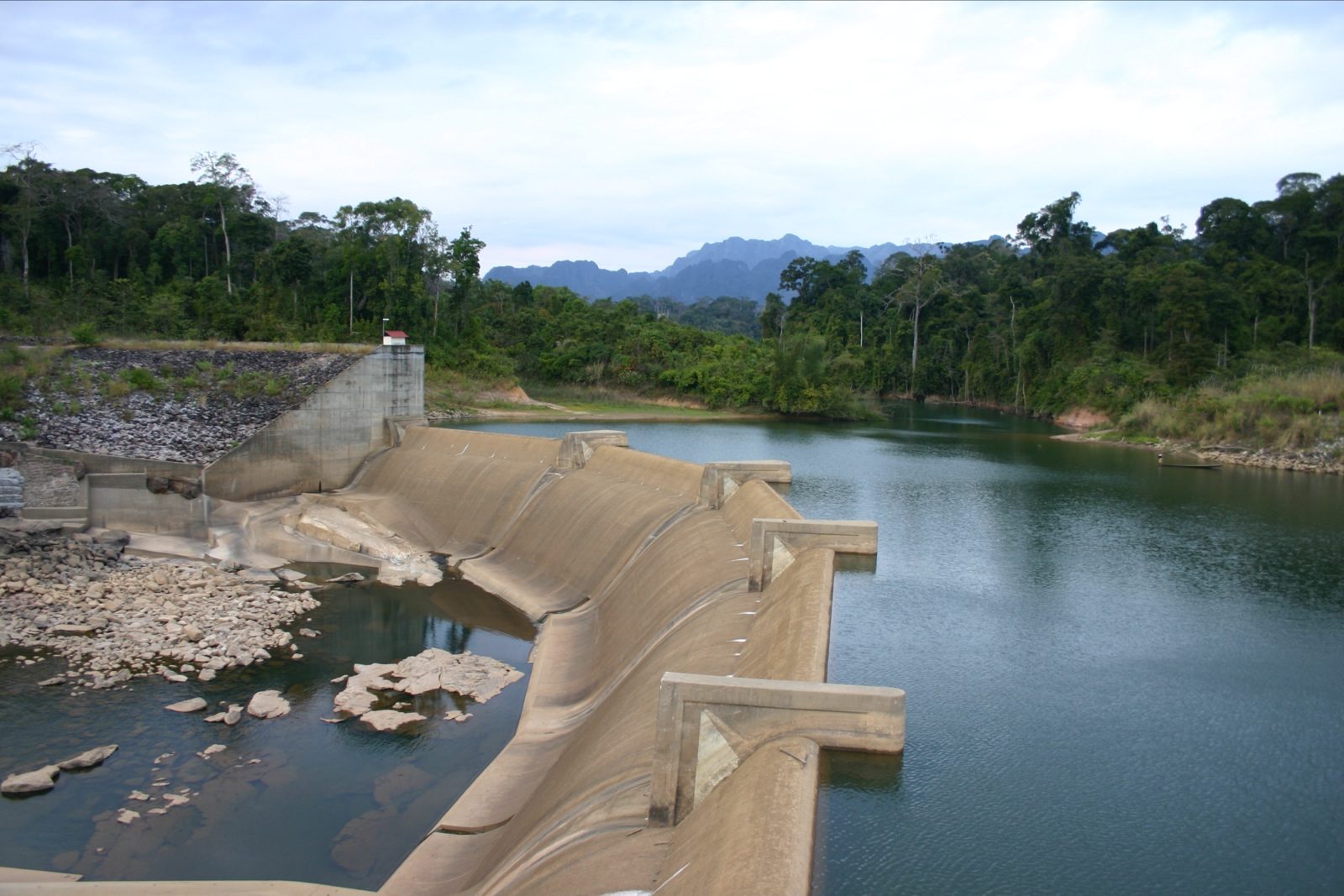
On 21 March 2025, the Laotian Times reported that a former deputy director of Électricité du Laos and 4 contractors, including 1 foreign national, were being prosecuted over the use of state assets on this project. The contract value stood at 89,970,000 US dollars, borrowed from Bangkok Bank, but the project owner had already paid the contractors 88,750,341 US dollars, or 98.64% of the contract value, while construction was only 76% complete.
The original contract required completion within 3 years, or around 2016. The deadline was then extended by another 3 years, but the dam was still not finished and had not yet begun producing electricity as planned. The planned generating capacity is 30 megawatts.
On 26 March 2025, Radio Free Asia, citing the Party's inspection journal, said the file had been sent to the Office of the People's Prosecutor of Vientiane Capital, and that the government would be responsible for repaying the loan plus interest even though the dam was not yet earning revenue from electricity.
After March 2025, no public court judgment has appeared, so what can be confirmed at this stage is only the amounts paid, the rate of progress, and the referral of the file to the prosecutors.
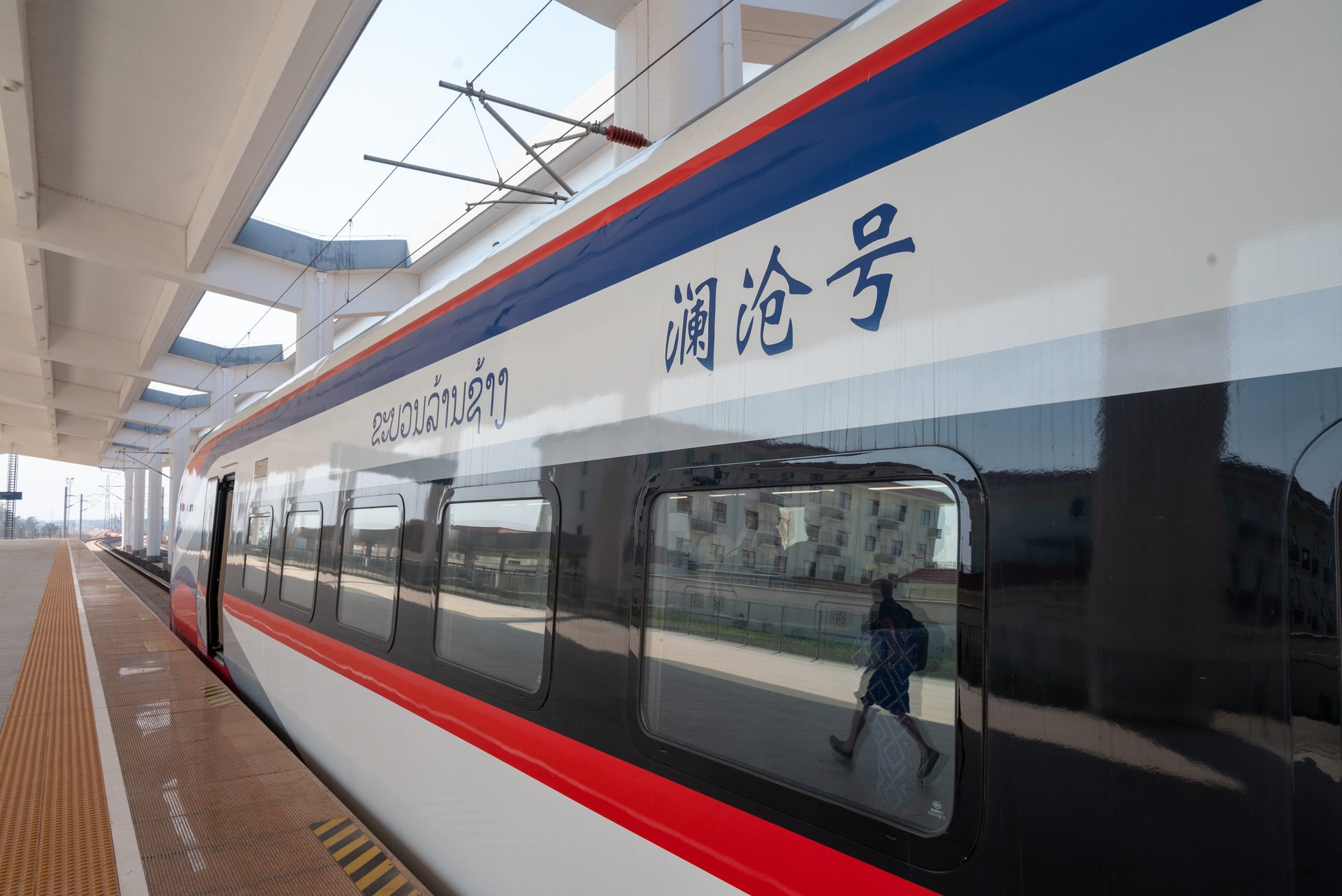
The Laos–China Railway
The project people often call the country's biggest driver of debt is the Laos–China Railway. But the project's financial documents show that the share the Lao state invested in directly is smaller than the debt of Électricité du Laos.
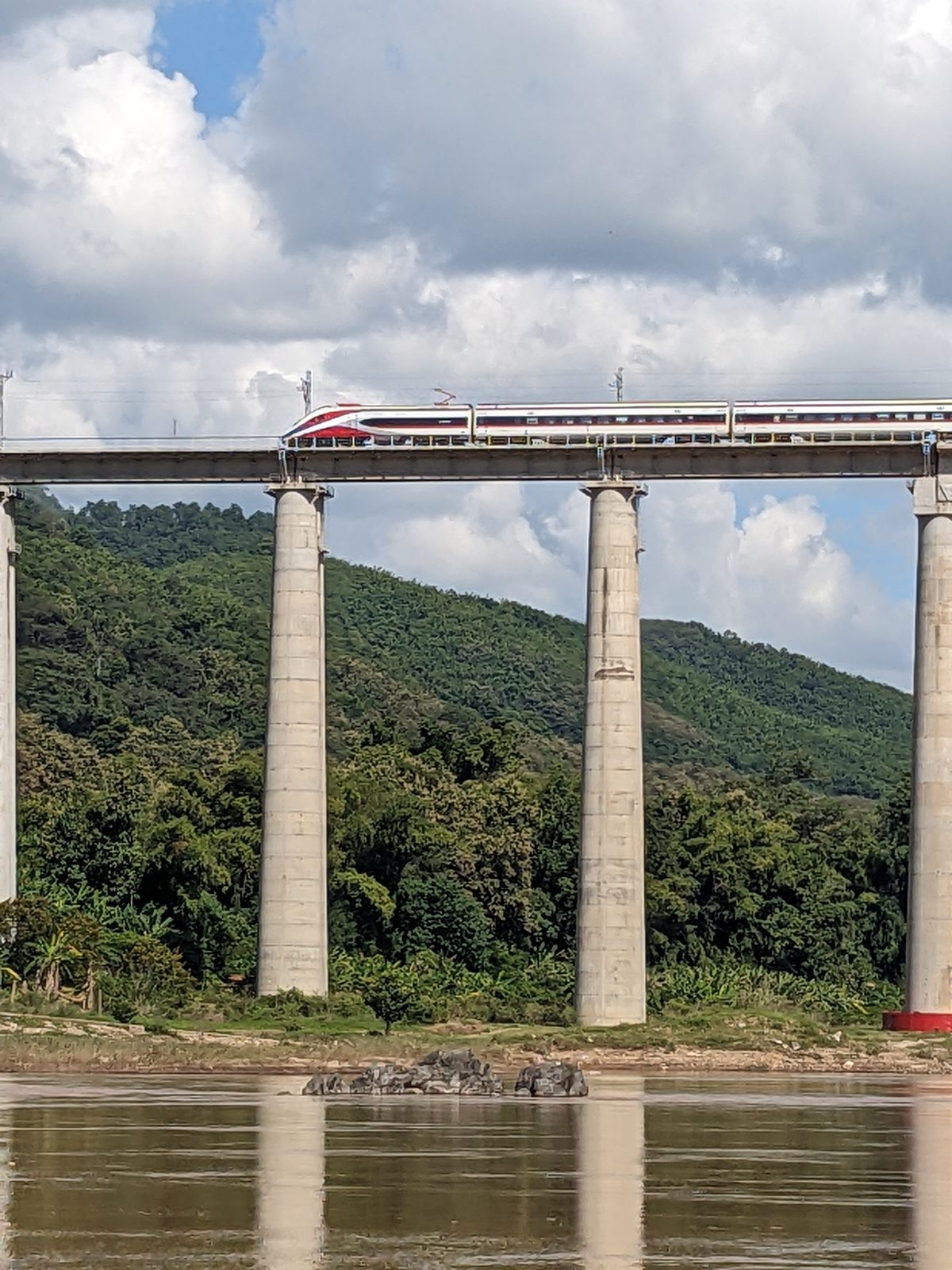
The AidData database records that the project's total cost was about 5.9 billion US dollars, split into 3.54 billion US dollars in loans and 2.36 billion US dollars in equity. The Laos–China Railway company is 70% owned by Chinese state enterprises and 30% by Lao state enterprises. The Lao government invested 730 million US dollars, borrowing 480 million US dollars from the Export-Import Bank of China under an agreement dated 8 September 2016, at 2.3% interest, with a 25-year term and a 5-year grace period on principal, and using 250 million US dollars from its own budget.
The railway opened for service in December 2021. On 7 January 2026, Minister of Public Works and Transport Leklai Sivilay told KPL that in 4 years the 422-kilometre Lao section had carried 12 million passengers and 16 million tonnes of goods, while the full line from Vientiane to Kunming, about 1,000 kilometres long, had carried more than 62 million passengers and 72 million tonnes of goods.
These passenger and freight figures are not the railway company's net profit figures, and the debt on the share that Laos invested in directly is still smaller than EDL's debt as estimated by the World Bank in 2021.
The Lao Sat-1 satellite
Another project the government itself confirmed to the National Assembly had been financed with borrowed money, but which ordinary people hear less about than the railway, is the Lao Sat-1 satellite.
On 7 January 2016, KPL quoted the then deputy prime minister, Somsavat Lengsavad, as saying the Lao government had signed a loan agreement with the Export-Import Bank of China in 2012 for 258 million US dollars for the first telecommunications satellite project, and that the amount Laos had to repay totalled 341 million US dollars, including 83 million US dollars in interest, with the aim of paying it in full by 2033.
The loan was used for the satellite, for building a station in Vientiane Capital, and for other administrative costs. The satellite was launched into orbit on 21 November 2015. KPL reported that it had 22 transponders, of which 2 would be used for domestic communications services and the rest leased to foreign users. The deputy prime minister told the National Assembly that about 80% of the net profit from Lao Sat-1's business would be set aside to repay the debt.
The AidData database splits the 2012 loan agreement into two contracts: a buyer's credit loan of 219.3 million US dollars and a concessional loan of 245 million yuan, or about 38.6 million US dollars, which together go toward the 341 million US dollars to be repaid by 2033, matching the figure KPL reported.
What has not appeared in official documents since then is the actual profit figure, and how much had been repaid by 2026. So what can be confirmed is only that the loan was used to put the satellite into orbit, and that the government told the Assembly it would repay the amount in full by 2033.
Compensation money in Attapeu
Even money set aside to help families hit by disaster has been mentioned in inspection reports.
The saddle dam of the Xe-Pian Xe-Namnoy hydropower project collapsed on the evening of 23 July 2018. State media in 2026 cited official figures of 49 people dead, 22 missing, and more than 6,000 people who had to be evacuated, while Radio Free Asia in 2024 and 2025 reported 71 people dead and 14,440 people who had to move.
The governor of Attapeu Province estimated total damage at more than 1,300 billion kip, or about 150 million US dollars at the 2018 exchange rate. The project has a generating capacity of 410 megawatts and a construction cost of about 1.02 billion US dollars. A project to build 700 new houses, with a budget of 24.5 million US dollars, began in June 2020 and was completed in 2022.
On 17 January 2024, Radio Free Asia quoted the then president of the State Inspection Authority, Khamphanh Phommathat, as saying that 81.22 billion kip in compensation had been used improperly, and that another 1.81 billion kip had no proper accounts, and that more than 697 billion kip in compensation had still not been paid because the assets had not yet been assessed.
On 16 September 2026, the Laotian Times, citing state news, said a final installment of 102.6 billion kip would be paid to 968 severely affected households by the end of September. But on 8 October 2026 the State Inspection Authority still told the National Assembly that it would continue to address the compensation problems from this incident. What remains unclear is how much of the money identified as improperly used has been recovered, and whether the final installment was paid in full as planned.
What the documents can tell us
When these figures are set side by side, you can see that the state's borrowed money and investment went to many places. Most of it went into the electricity system and dams. Some went into the railway, the satellite and urban transport.
The United Nations Conference on Trade and Development (UNCTAD) wrote in 2026 that public debt including guarantees stood at about 87% of gross domestic product in 2025, and that interest on the debt consumed about 16% of the budget that year, more than public spending on health and education combined, which was about 10%. The International Monetary Fund's assessment in January 2026 also judged that Laos's public debt was still not at a sustainable level.
On 8 October 2026, the National Assembly Standing Committee heard that the State Audit Organization had found financial irregularities and potential losses of about 30.514 billion kip and 25.42 million US dollars, of which 11.171 billion kip and 3.75 million US dollars had already been recovered to the budget.
What these documents can tell us is that borrowed money has been used to build things people see every day — electricity, roads, buses and the railway — but that some of it is still tied up in unused vehicles, transmission lines that are not yet efficient, a dam that has been paid for but is not yet producing power, and accounts that still do not match.
As for where each kip went after that, how much can be recovered, and how the files sent to the prosecutors will end, that is what the National Assembly, the inspection authorities and the prosecutors are still pursuing.


