On 23 March 2026, members of the National Assembly voted 99% to elect Thongloun Sisoulith as President for another term, and in the news this was the day the country got its leader.
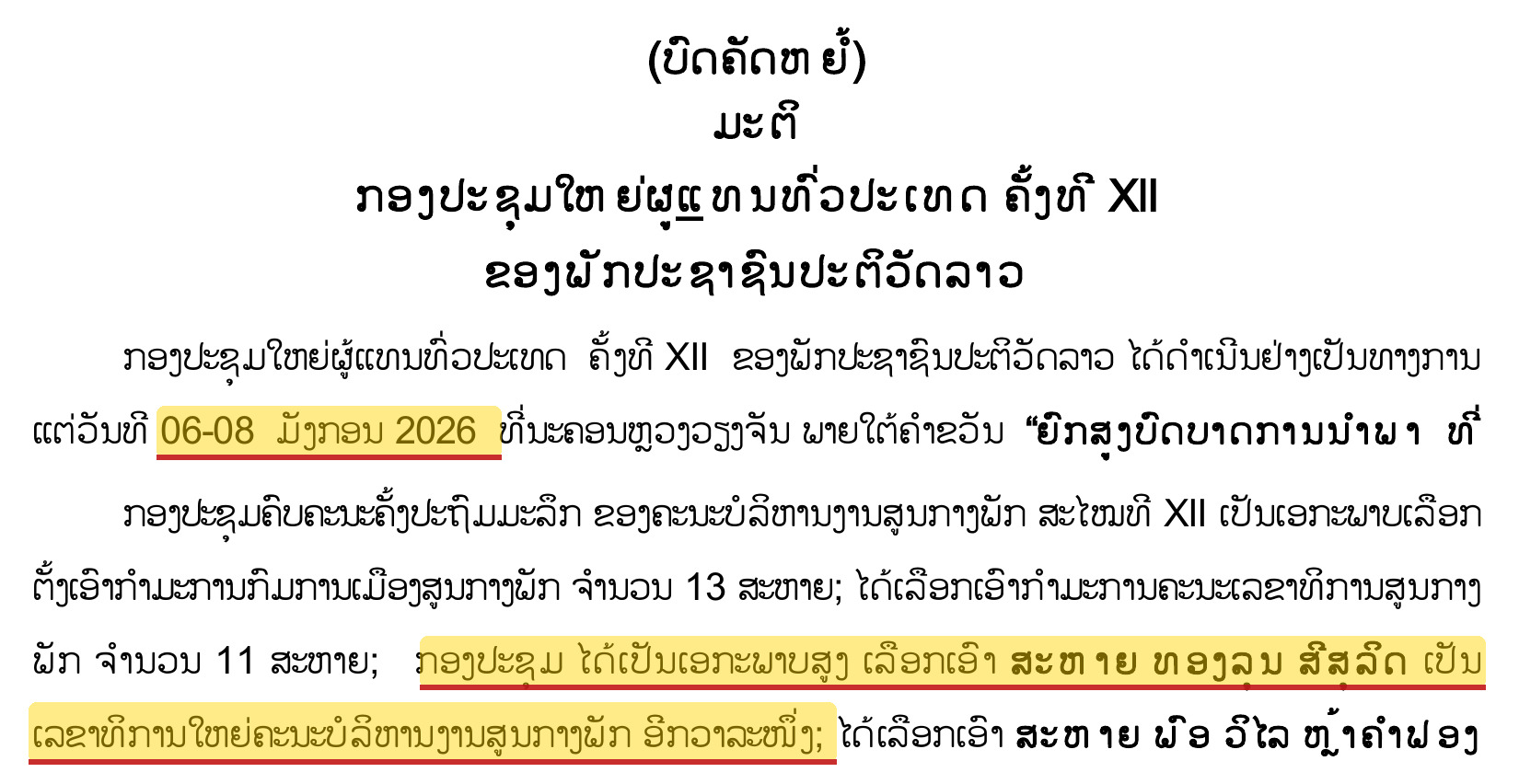
But if you turn back the calendar, you will see that more than two months earlier, on 8 January 2026, the Party congress had already elected him General Secretary of the Party Central Committee "for another term".
Ask yourself this: if you want to know who will lead the country, should you look in the ballot box, or in the Party meeting room?
The answer is in official documents — the Party statute, the constitution and official news — which record how Laos's leaders are chosen and how power has passed from one generation to the next since 1975.
Two doors of power
Think of a house with two doors, one after the other. Anyone who wants to sit in the innermost room has to go through the first door, and only then reaches the second. The choosing of leaders in Laos is similar, because two sets of rules work as a pair: the Party statute and the constitution.
The link between the two is written in Article 3 of the constitution, which says the political system has "the Lao People's Revolutionary Party as its leading core". The Party statute adopted in 2021 then explains how that leading core works. Article 37 says the Party "selects outstanding Party members and officials" to stand for election or to be appointed to state bodies, and another clause in the same article says the Party's lines and resolutions must be turned "into law".

Put simply, the first door is the Party choosing the person, and the second is the state confirming that person under the law. And every time so far, Laos's top leader has come through the first door first.
A congress once every five years
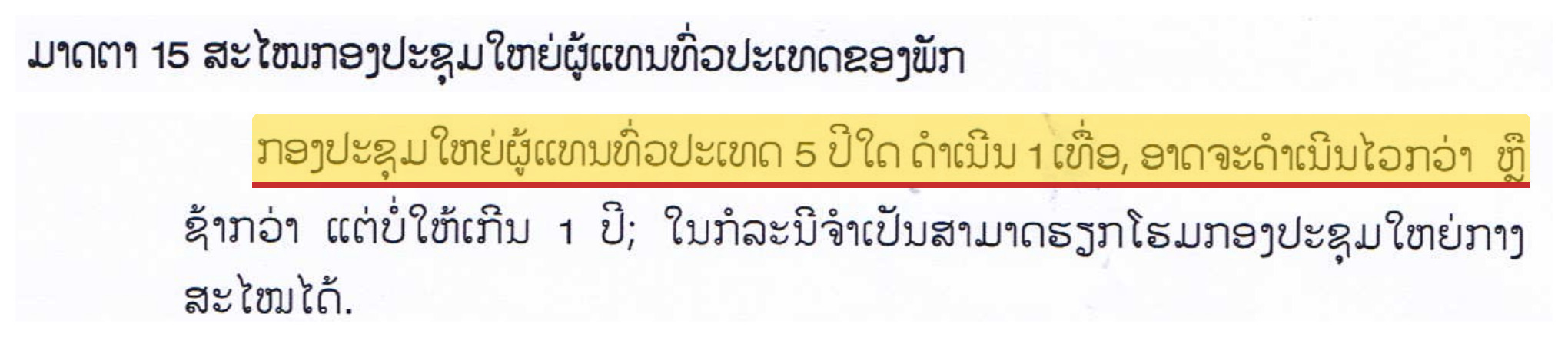
The first door opens once every five years, because Article 15 of the Party statute says the national congress is "held once every five years", and that it may be brought forward or delayed, but by no more than one year.
Read according to the statute, the steps are like a staircase. The first step is that Party organisations at lower levels elect delegates to the congress by "equal, direct and secret" ballot, though there is an exception: members of the outgoing Party committee join as delegates "without going through an election". The second step is that the congress elects the new Party Central Committee, and anyone elected must receive more than half the votes of the delegates present. The third step is the first plenary session of the new Central Committee, which elects the Politburo and elects the General Secretary.
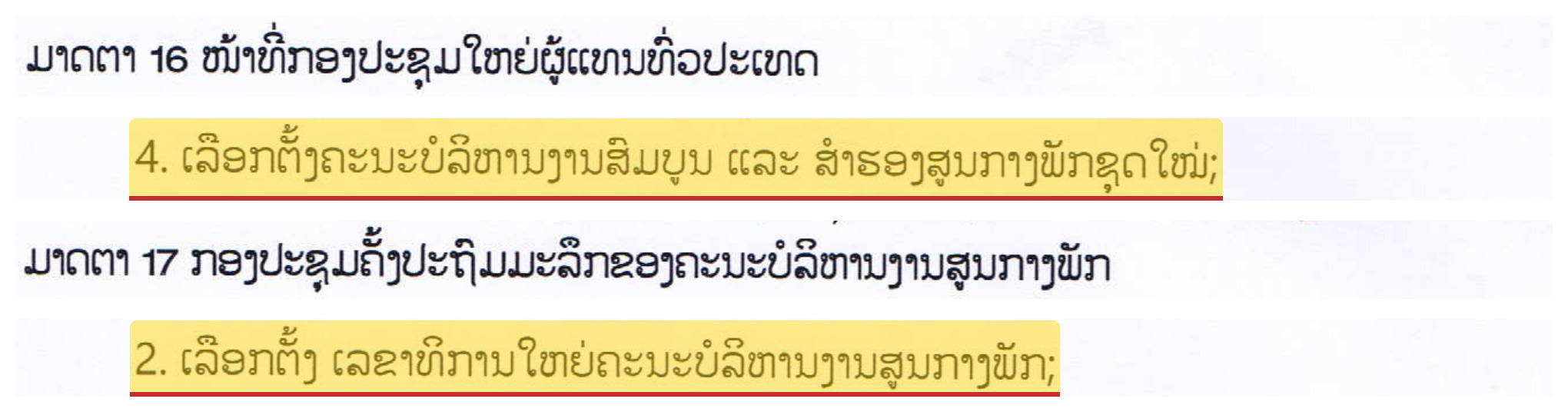
This means Party members across the country do not elect the General Secretary directly, because the people who vote are only the full members of the Central Committee. Alternate members may attend the meeting and speak, "but do not have the right to vote".
The figures from the most recent congress make the picture clearer. The 12th Congress was held on 6–8 January 2026 in Vientiane, with 834 delegates present. It elected 73 full members of the Central Committee and 15 alternate members. The new Central Committee then elected a Politburo of 13 members, a Secretariat of 11 members, and elected Thongloun Sisoulith as General Secretary for another term. The same congress also adopted the amended Party statute. So the people who actually have the right to choose the Party leader number only 73.

The congress has a long history. The first was held in 1955 at Ban Namao in Houaphan province, under the name Lao People's Party. Vientiane Times records that at the time there were about 20 delegates, from 400 members. At the 2nd Congress in 1972 the Party changed its name to the Lao People's Revolutionary Party. After that, congresses were held in 1982, 1986, 1991, 1996, 2001, 2006, 2011, 2016, 2021 and 2026, and the Party grew steadily: in 2006 there were 498 delegates representing 148,590 members, and in 2021 there were 768 delegates representing 348,680 members.
If you read only the statute, all of these steps look like an election with a secret ballot and a count of votes. But the historian Martin Stuart-Fox, who has written about Lao politics for many decades, has another observation. In 2011 he wrote that before a congress there are months of internal consultation and bargaining over who will enter the Politburo and the Central Committee, and that the congress is where what has already been agreed is confirmed. In 2021 he wrote in a similar vein that posts on the Central Committee are decided in advance, through a process outsiders cannot see.
Both of these things may be true at once: ballots are cast in the meeting room, but the decisions may have been made before anyone walked in.
From Party to state: January, February, March
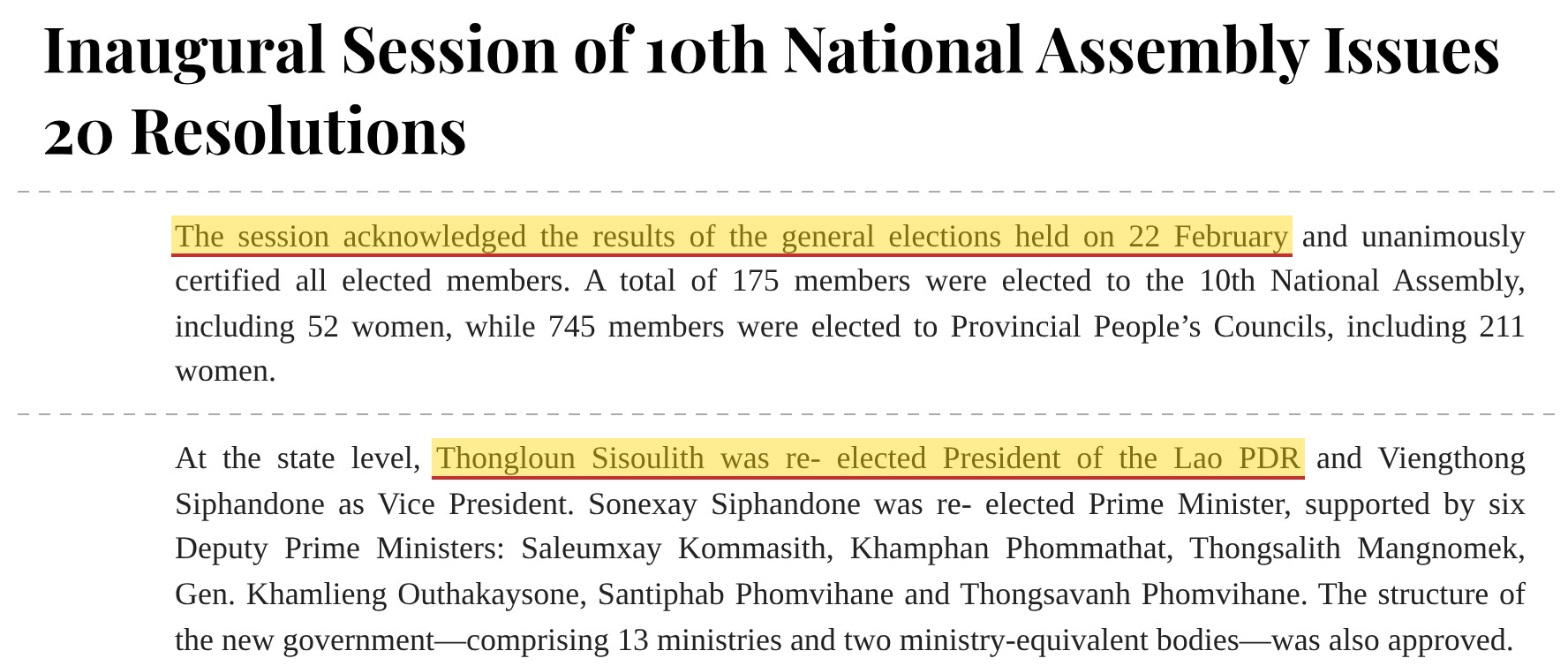
Once the first door has been passed, the second door opens a few months later, and 2026 is a clear example. In January there was the Party congress. On 22 February there was the election of National Assembly members, returning 175 members, including 52 women. Then the first session of the new National Assembly, on 23–27 March, elected the President, the Vice President, the President of the National Assembly and the Prime Minister.
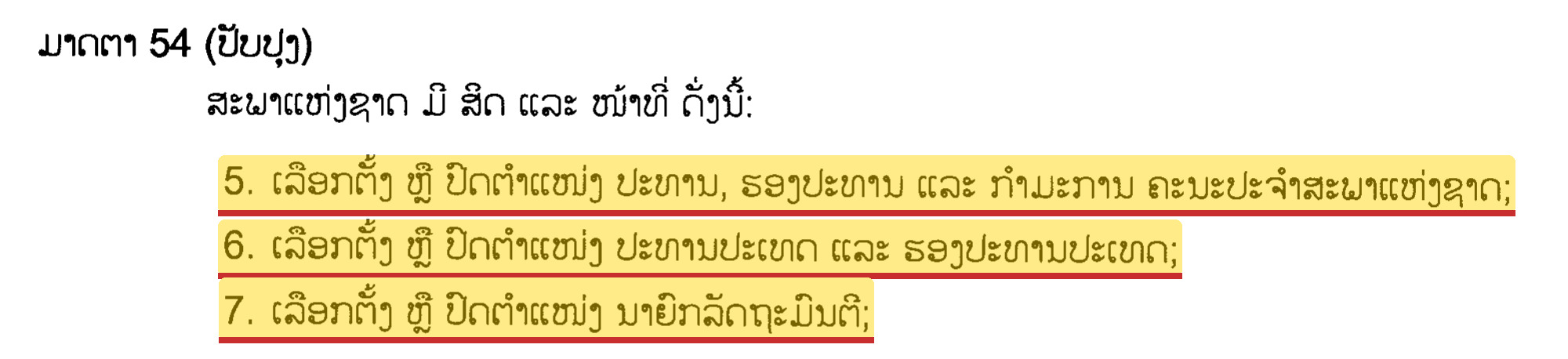
Under the 2025 constitution, the power to choose the leaders of the state is in the hands of the National Assembly. Article 54 gives the Assembly the power to elect or remove the President of the National Assembly, the President, the Vice President and the Prime Minister. Article 67 says the President "is elected by the National Assembly" with more than two-thirds of the votes of the members present. Each National Assembly has a term of five years, the same interval as the Party congress.
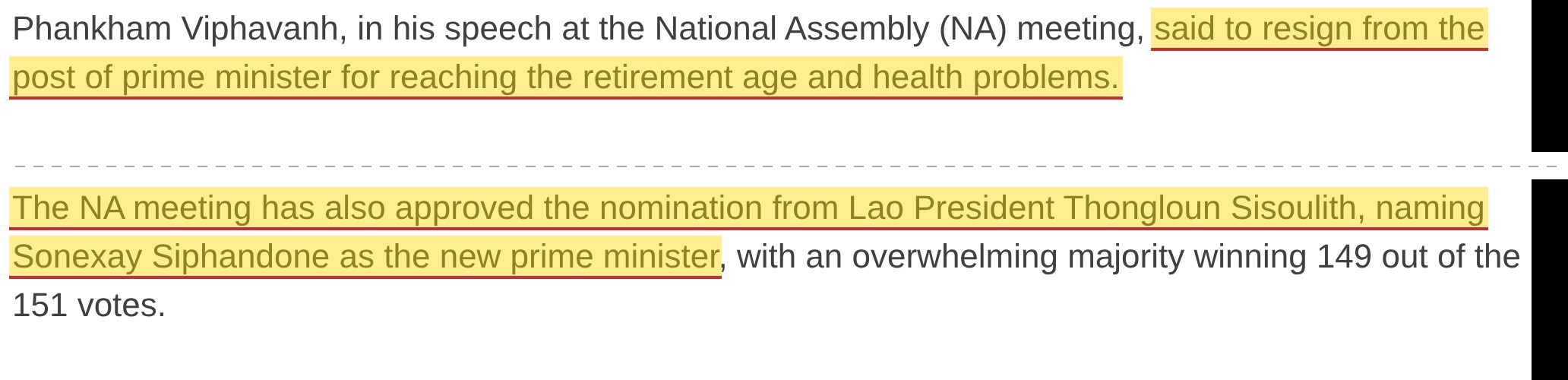
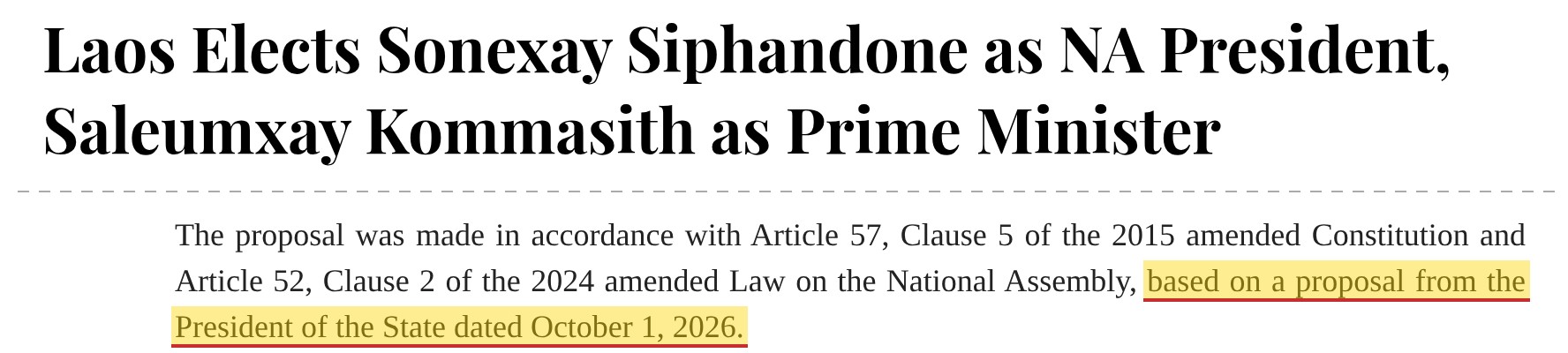
And who proposes the names? The 2015 constitution wrote that the National Assembly elects the Prime Minister on the proposal of the President, and in practice it is like that. On 30 December 2022, for example, the National Assembly approved Sonexay Siphandone as Prime Minister on the proposal of President Thongloun Sisoulith, by 149 votes out of 151. And on 5 October 2026, KPL reported that the Standing Committee of the National Assembly had proposed a name for the new President of the National Assembly based on "a proposal from the President of the State dated October 1, 2026".
Another pattern that can be seen clearly is that, from 1998 onwards, the person who heads the Party has also been President. The historian Simon Creak pointed to this pattern in 2021. So the second door often opens for the same person who came through the first.
For those looking from the outside, in 2018 the UN Human Rights Committee noted the Party's leading role as written in the constitution, and considered that the rules for nominating candidates, together with other restrictions, "do not ensure the right of citizens to genuinely take part in the conduct of public affairs".
How each generation has handed power on
From the founding of the Lao PDR in 1975 to the present, the Party has had five chiefs, and power has changed hands many times, in the posts of Party chief, President and Prime Minister.
Kaysone Phomvihane led the Party from 1955, and after 1975 he was Prime Minister. When the first constitution came out in 1991, the National Assembly elected him President, with Khamtai Siphandone as Prime Minister.
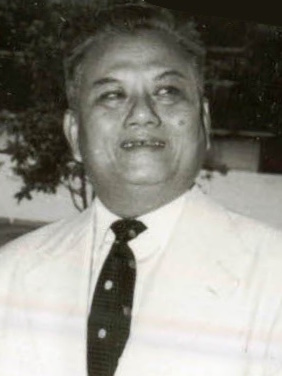
Kaysone died on 21 November 1992, and what happened next shows the order of the two doors clearly. According to Vientiane Times, on 24 November the Party Central Committee opened an extraordinary session and elected Khamtai as Party Chairman. The next day, 25 November, the National Assembly opened an extraordinary session and elected Nouhak Phoumsavanh as President. The Party first, the state after, and all of it finished in less than a week.

Khamtai went on to lead the Party, and in 1998 the National Assembly elected him President in place of Nouhak. Then came the 8th Congress in March 2006, which approved the retirement of Khamtai and Nouhak, elected Choummaly Sayasone in his place, and changed the name of the top post from "Party Chairman" to "General Secretary". In June of the same year, the new National Assembly elected Choummaly as President. Khamtai died on 2 April 2025, at the age of 102.
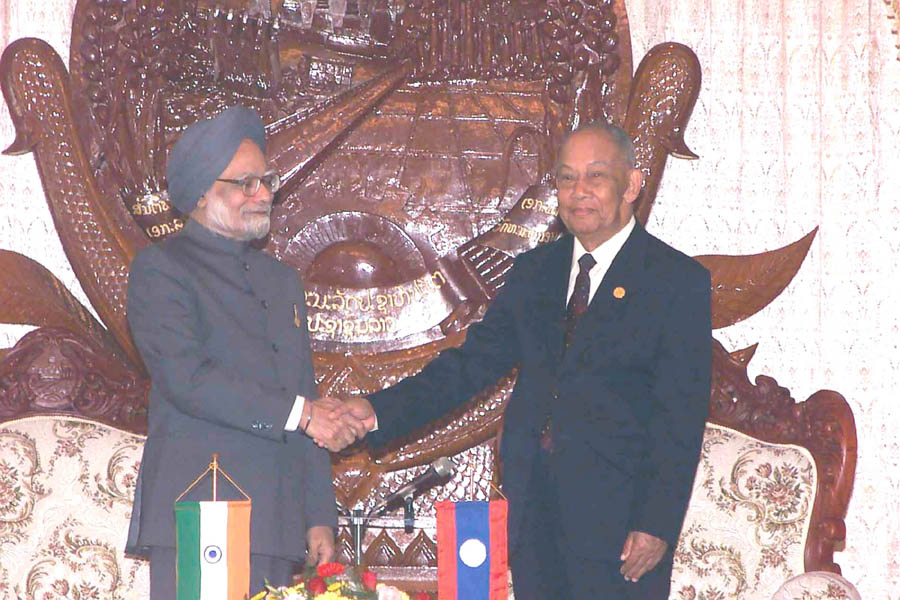

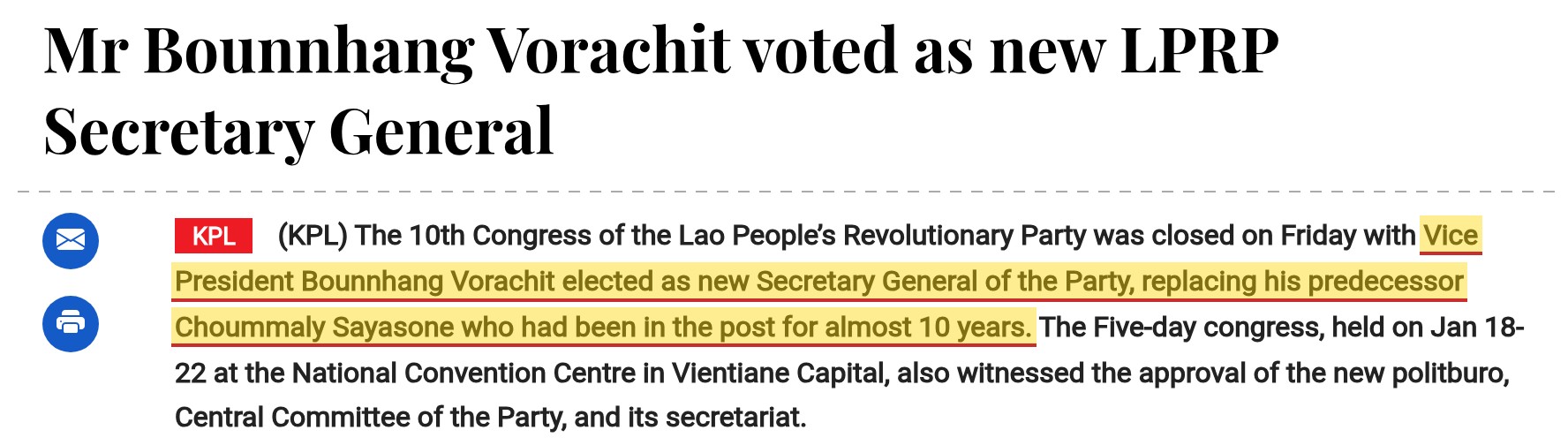
Ten years later, the 10th Congress in January 2016 elected Bounnhang Vorachit, who was Vice President at the time, as General Secretary in place of Choummaly. Then on 20 April 2016 the National Assembly elected him President, and elected Thongloun Sisoulith as Prime Minister with 147 votes.
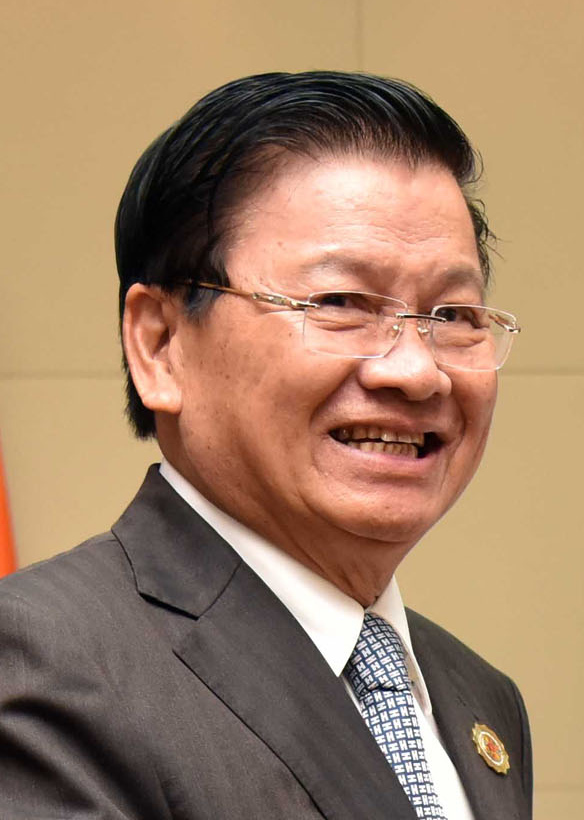
Five years later, the 11th Congress in January 2021 elected Thongloun as General Secretary in place of Bounnhang, who retired, and on 22 March 2021 the National Assembly elected Thongloun as President. By 2026 he had been re-elected to both posts.
The post of Prime Minister has changed mid-term more often. In December 2010, Bouasone Bouphavanh resigned, giving family reasons, and the National Assembly elected Thongsing Thammavong, who was President of the National Assembly at the time, in his place. In December 2022, Phankham Viphavanh resigned because of age and health. And in 2026, after Xaysomphone Phomvihane, the President of the National Assembly, died on 8 August, the National Assembly elected Sonexay Siphandone from the post of Prime Minister to be President of the National Assembly, and elected Saleumxay Kommasith as the new Prime Minister on 5 October, with the votes of all 158 members present. The Diplomat observed that official media did not give a reason for this reshuffle, and wrote that in Laos it is often hard to tell which appointments come from performance and which from connections.
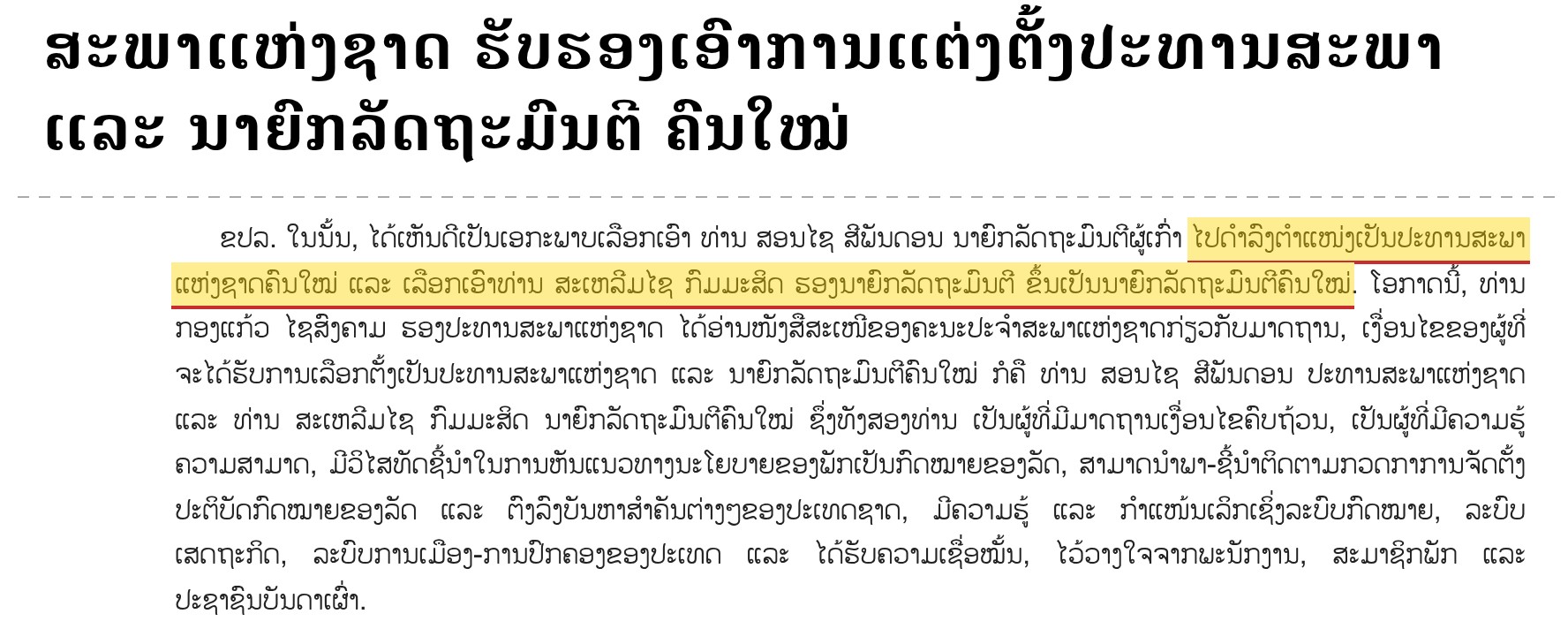
If you lay every change side by side, a pattern appears: power changes hands because a leader has died, has retired at a congress, or has resigned, and then the National Assembly confirms it. Across 51 years, each change has been calm and quick, which official media often call unity. But there has never been a time when the top leader changed because of a multi-party election contest.
Children of the first generation of leaders
Looking at the list of leaders in 2026, two surnames will sound familiar: Phomvihane and Siphandone, the surnames of the first two Party chiefs.
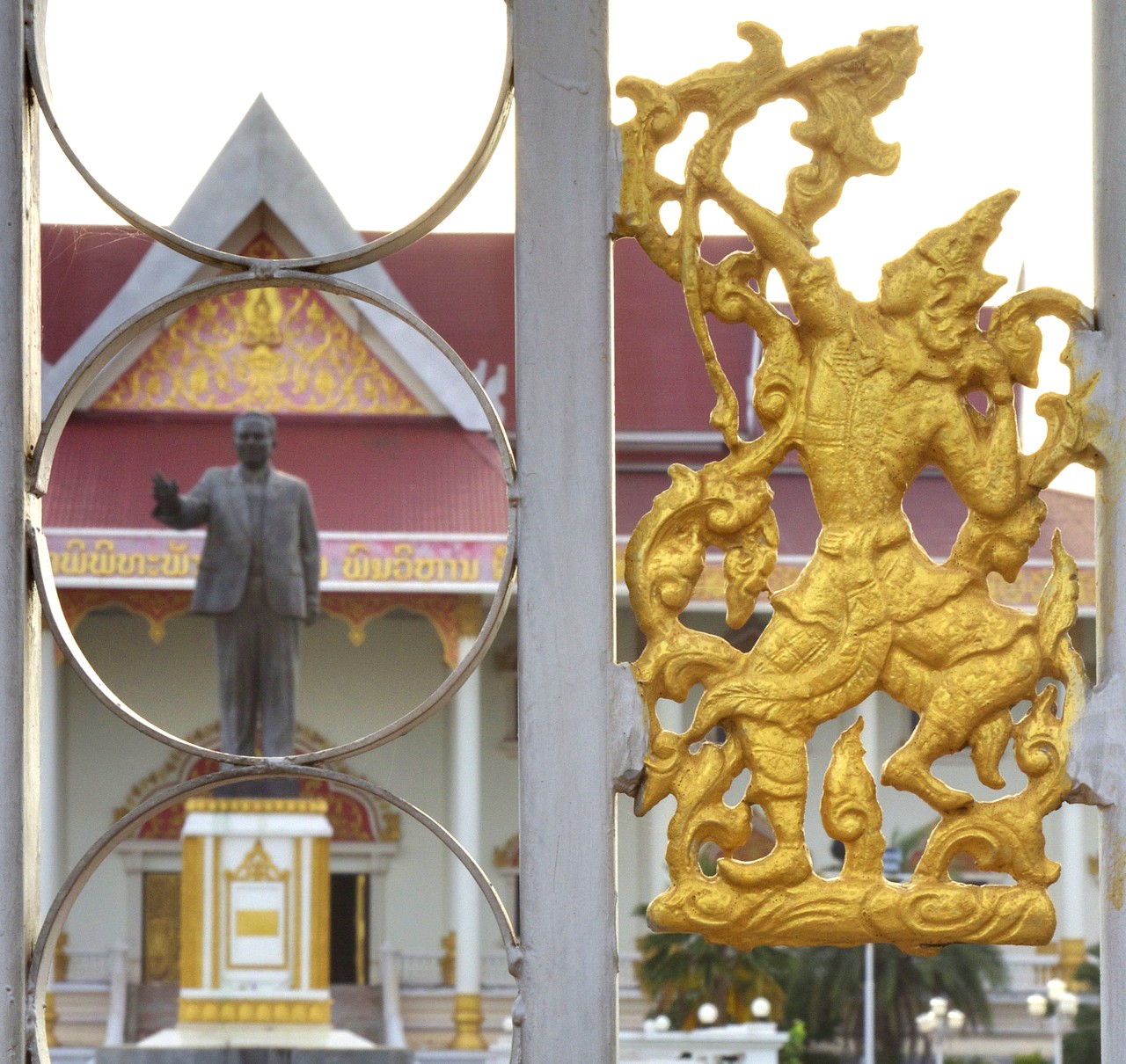
At least three of Kaysone's sons hold high office. Xaysomphone Phomvihane was deputy governor and then governor of Savannakhet, was a minister attached to the Prime Minister's Office, entered the National Assembly in 2006, and was President of the National Assembly from 2021. He ranked second in the 12th Politburo before he died. Thongsavanh Phomvihane has been Minister of Foreign Affairs since November 2024 and Deputy Prime Minister since March 2026. And Santiphab Phomvihane, whom Radio Free Asia reported to be a son of Kaysone, was governor of Savannakhet, and since March 2026 has been Deputy Prime Minister and Minister of Finance.
The children of Khamtai follow a similar path. Sonexay Siphandone entered the Party Central Committee in 2006, entered the Politburo in 2016, was Prime Minister from the end of 2022 until October 2026, and is now President of the National Assembly. Viengthong Siphandone, a daughter of Khamtai and a former President of the People's Supreme Court, was elected Vice President in March 2026.
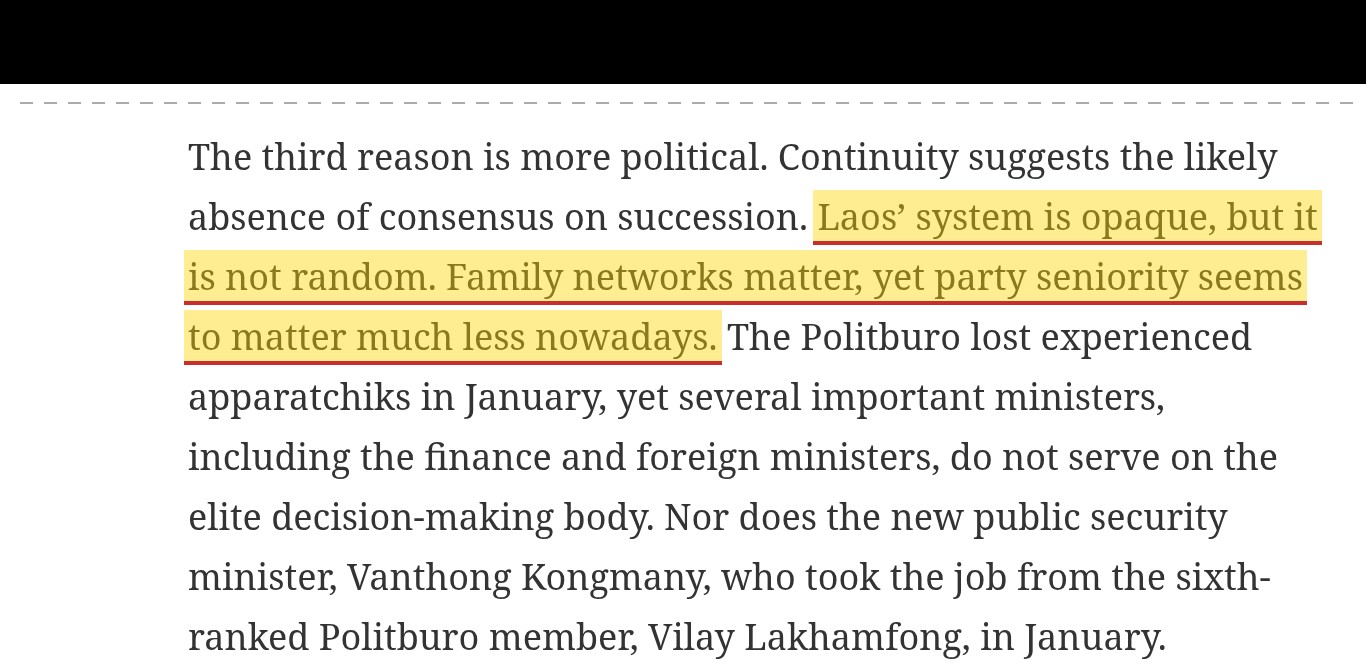
This is something that should be looked at from more than one angle, because several scholars who follow Lao politics see family networks as carrying weight. Martin Stuart-Fox wrote in 2021 that the promotions at that congress were a reminder that influential families still have a large say in political outcomes. Simon Creak wrote in the same year that the networks of revolutionary families are not going to disappear anytime soon, but he also noted that a new generation of technically trained officials with higher education may be coming to play a larger role. An analysis in The Diplomat in 2026 likewise concluded that Laos's system looks as if it has no way in, but is not a matter of chance, because family networks matter, while seniority inside the Party seems to matter less.
On the other side, the state has a different explanation. In 2021 a Lao official told Radio Free Asia that members of the new government had risen to their posts through ability, not because of family ties, because they had been in the Party for a long time and had knowledge and ability. He also said that the children of revolutionary leaders have discipline, respect the law, and are grateful to their parents. Work histories also show that many of them passed through several levels of work before reaching high office. And even The Diplomat itself wrote that Viengthong is seen as a politically capable person with organisational experience.
A person may have both ability and a surname that opens the door faster than for others. But for an ordinary Lao young person who does not have a surname like that, is the same door open wide enough?
Two terms and the question of 2031
There is one rule that will bring the question of succession back again in a few years' time. Article 14 of the 2021 Party statute says the General Secretary "shall not serve for more than two consecutive terms", and Article 67 of the constitution says the President serves "for no more than two consecutive terms". This limit was not there from the start. The constitutions of 1991 and 2003 did not have it. It was added only in the 2015 edition.

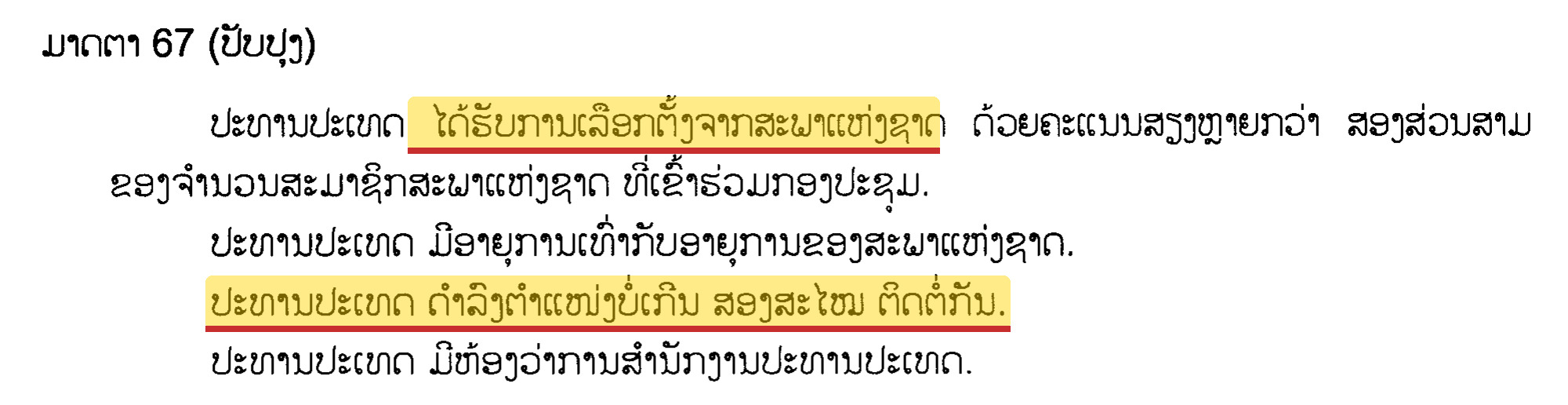
Thongloun was elected General Secretary and President in 2021 and in 2026. If the rules stay as they are, the next congress, which under the schedule would be held around 2031, will have to choose a new Party chief. As for the amended Party statute adopted in January 2026, the full text has not yet been released to the public, so the two-term limit described here is that of the 2021 edition.
The Diplomat recorded that before the 2026 congress there was speculation that the top posts might change, especially around Xaysomphone, who had risen to second place in the Politburo, but the Party chose continuity. That analysis interpreted the continuity as perhaps showing that there was not yet agreement on a successor, and also noted that of the five most recent Vice Presidents, three later became Party chief, President or Prime Minister. Not long after that, Xaysomphone died, and as of now it has not been announced who the successor will be.
Back to the question
If you want to know who will lead the country, the answer therefore begins in the Party, because the first door is in the Party: the congress elects the Central Committee, and the Central Committee elects the General Secretary. The second door is in the National Assembly, which elects the President and the Prime Minister under the constitution, with names proposed from the top down.
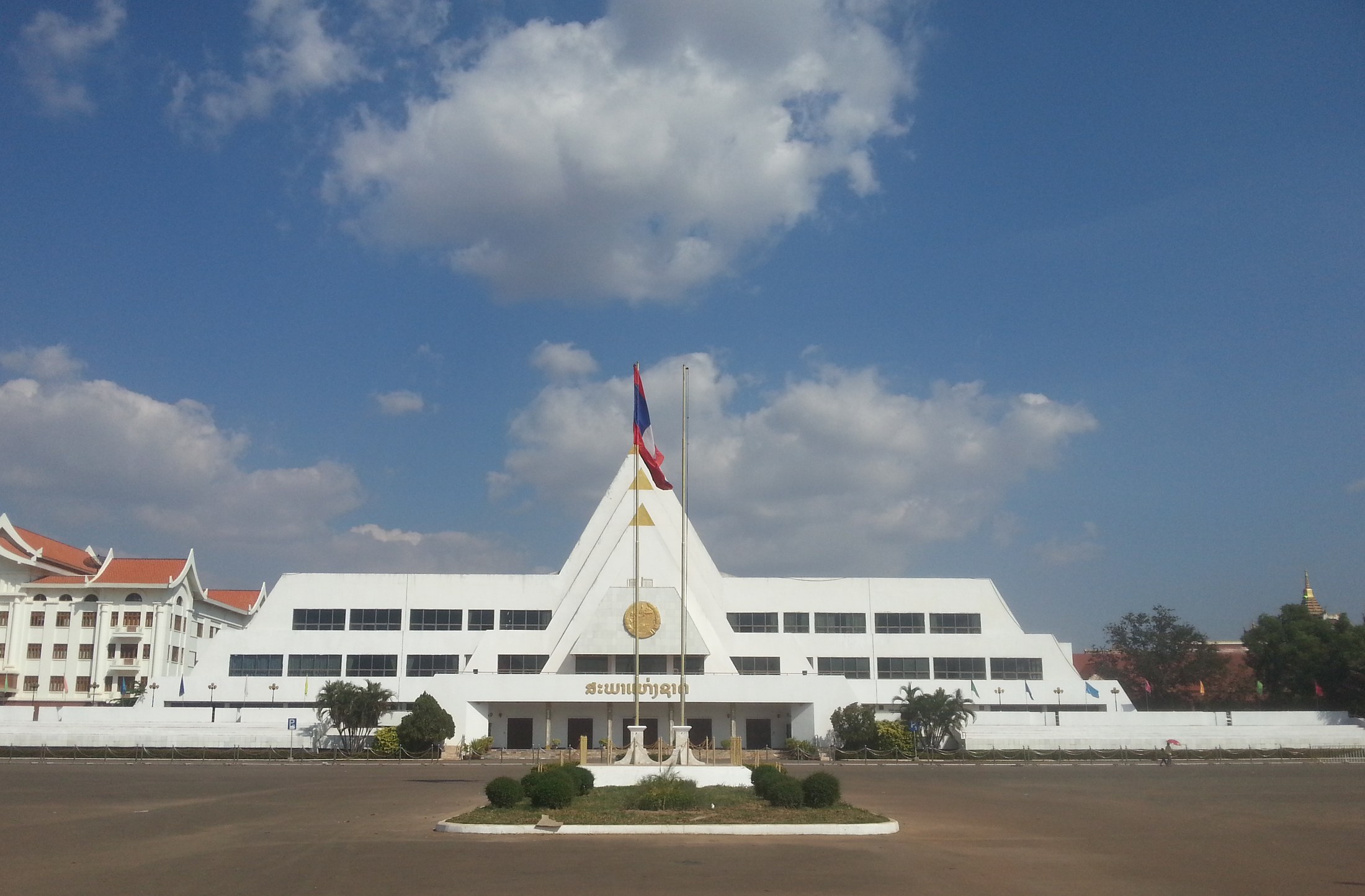
If you want to follow this, remember the rhythm of the political calendar: the Party congress, then the election, then the first session of the National Assembly. That rhythm will come around again around 2031.
So the next time you see news of the Assembly voting 99%, the important decisions will already have been made in the Party meeting. And of those two doors, which one have you had a part in opening?


